



Databricks Retail Use Case: 5x Faster Insight to Action in ERP Systems

17

1
This Databricks retail use case shows how analytics can be transformed into real operational action inside ERP systems.
In most enterprise retail environments, analytics stops at dashboards. Insights are generated, visualized, and shared across teams, but rarely translated into immediate operational action.
As a result, business users rely on manual processes such as exporting data, mapping records in Excel, sending emails, and updating ERP systems separately. These workflows are slow, error-prone, and difficult to scale.
At Aggranda, we redesigned this flow using Databricks to close the gap between insight and execution.
The Challenge
Retail organizations often operate with disconnected systems. Analytics platforms generate insights, ERP systems manage operations, and teams manually bridge the gap between the two.
In this Databricks retail use case, a typical operational update required exporting data from dashboards, manually mapping jobs and client records, adding comments offline, and updating NetSuite ERP manually.
Each cycle could take 4 to 5 hours and involved multiple teams and handoffs. This created delays, inconsistencies, and limited the real impact of analytics.
The Solution – Databricks + ERP Integration
In this Databricks retail use case, Aggranda redesigned the architecture using Databricks as the central data platform.
Instead of treating analytics as a final step, we enabled a continuous loop between data, insight, and action.
Key components include data ingestion from NetSuite ERP into Databricks, pre-joined datasets combining jobs and client information, a unified and governed dataset, and secure API-based write-back into ERP systems.
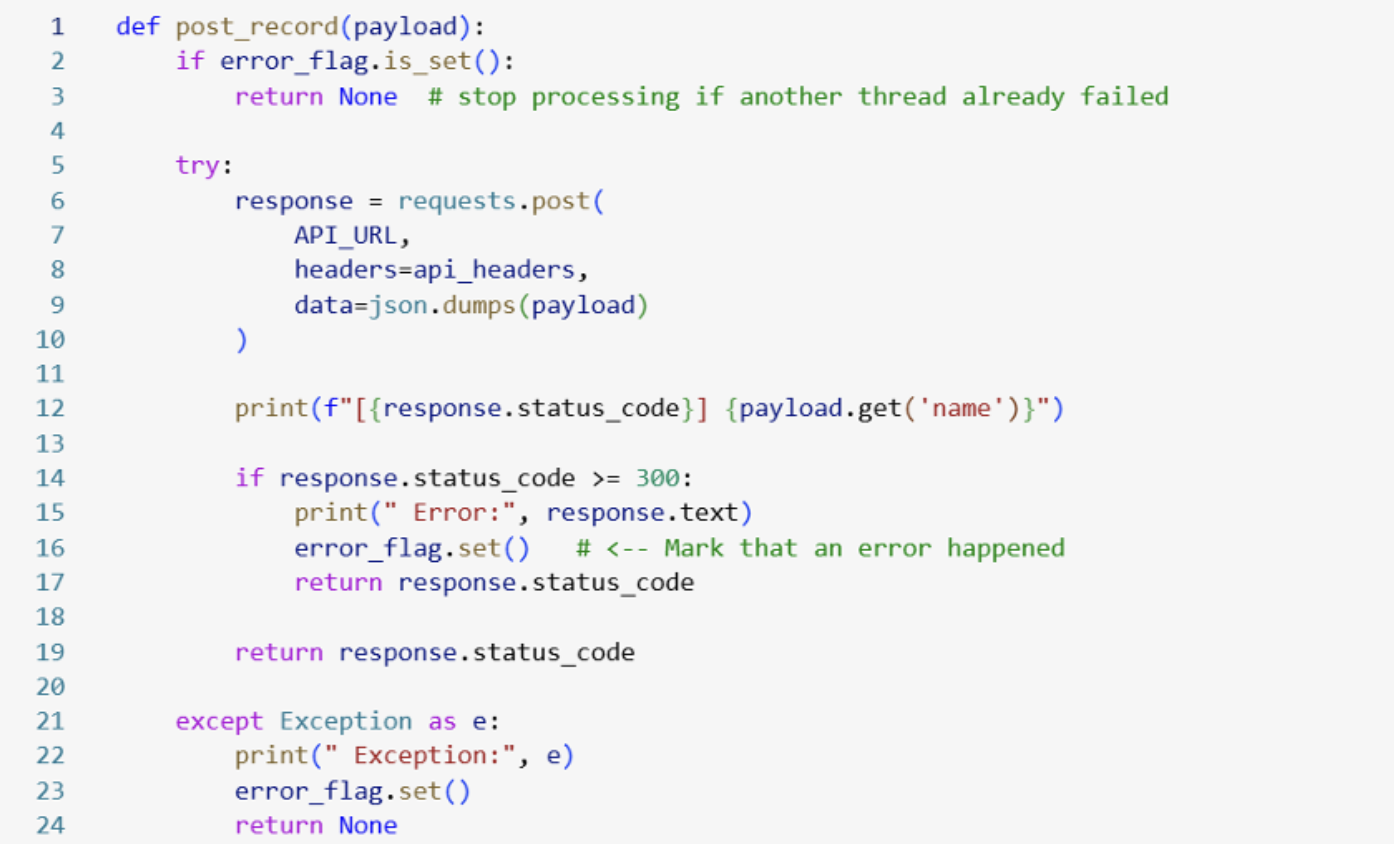
This Databricks retail use case ensures that insights are not only visible, but directly actionable.
Architecture Overview
The solution is built around a modern data engineering architecture.
NetSuite ERP flows into Databricks, where data is processed and unified into a governed dataset. From there, APIs enable direct updates back into the ERP system.
This creates a closed-loop system where analytics directly drives operational execution.
The Impact
The impact of this Databricks retail use case was immediate.
Processes that previously took 4 to 5 hours now take minutes. Manual exports, emails, and data mapping have been eliminated. Data consistency across systems has improved, and decision-making is faster at both operational and leadership levels.
Leadership teams now have access to live operational insights and the ability to act instantly.
A similar Databricks retail use case focused on performance optimization reduced a NetSuite data pipeline from 10 hours to just 17 minutes, demonstrating how scalable data architectures can significantly improve operational speed. See the Databricks NetSuite performance use case.
Why This Matters
Many organizations invest heavily in analytics but fail to connect it to real business outcomes.
Dashboards alone do not create value.
This Databricks retail use case shows that real value comes from operationalizing insights quickly, securely, and at scale.
Technical Stack
- Databricks platform for data processing and pipeline orchestration
- NetSuite ERP as the operational system
- Unified dataset combining jobs and client data
- API layer for secure write-back into ERP systems
Use Case Summary
This Databricks retail use case demonstrates how enterprise retail organizations can move beyond dashboards and build real operational impact.
Instead of relying on manual processes such as exports, Excel mapping, and email communication, this approach enables a direct connection between analytics and execution.
By using Databricks as the central data platform, organizations can unify data, generate insights, and trigger actions in ERP systems automatically.
This significantly reduces operational delays, eliminates manual work, and improves data consistency across systems.
For retail companies operating at scale, this type of architecture is essential to remain competitive and responsive. This Databricks retail use case is a practical example of how modern data engineering can drive real business outcomes.
About Aggranda
Aggranda helps enterprise organizations transform complex processes into scalable, intelligent workflows using automation, data engineering, and AI.
With over 1 million hours of manual work saved for clients, Aggranda delivers real business impact through production-ready solutions.
Learn more about the Databricks platform.